
Marigha
The historic salt valley of the High Atlas
- Distance
- 6.6 km from Dar Tassa
- Getting there
- About 12 minutes by car
- Good for
- Salt pans, village life, olive groves and presses
Nestled in the foothills below the Azzaden Valley, Marigha is one of the High Atlas's best-kept cultural secrets. Famed for centuries for its natural brine springs, historic earth-brick monuments and terraced olive groves, it offers a rare, authentic journey into living Moroccan heritage.
Marigha is not a monument, and that is exactly the point. It is a cluster of pisé houses, irrigation channels and orchards where daily Amazigh life carries on much as it has for centuries.
Walking through it in the morning you will meet women carrying fodder, the communal oven at work, and children on their way to school. Go slowly, greet people, and accept the tea if it is offered.
What to see
The ancient salt mines
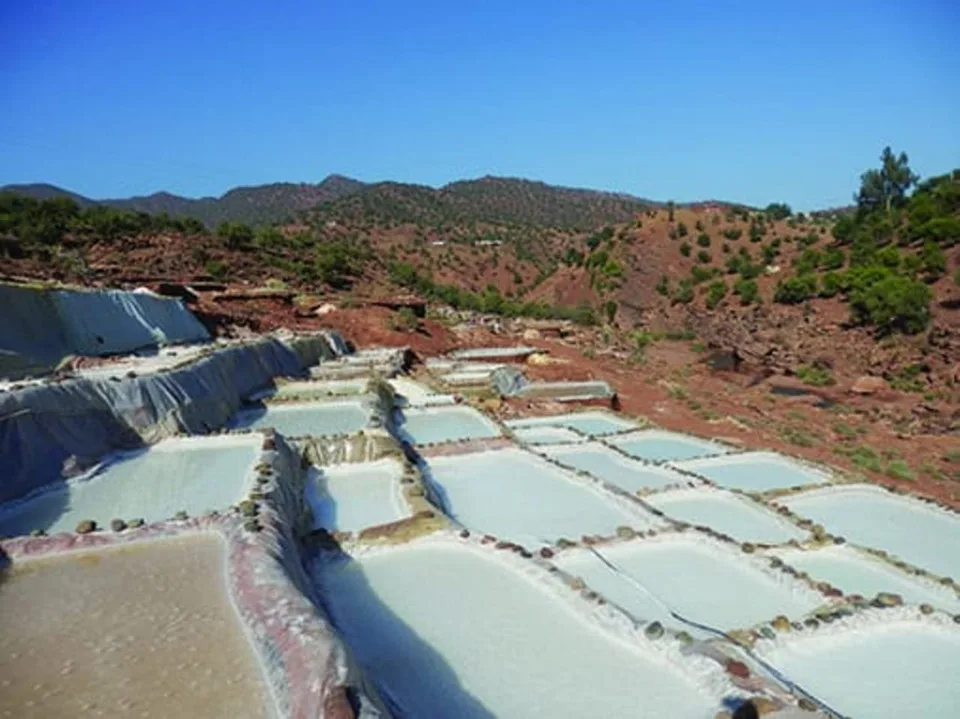
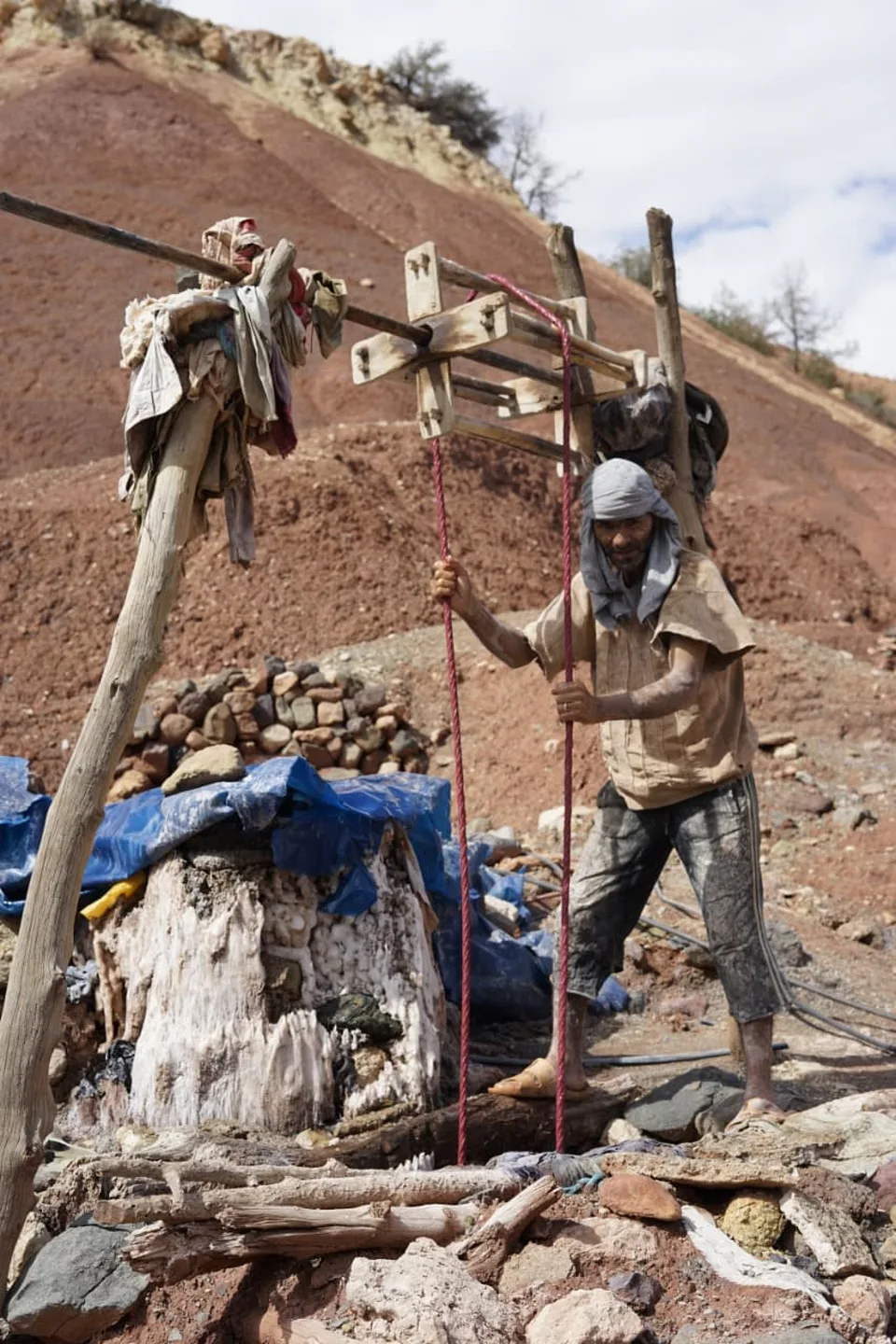
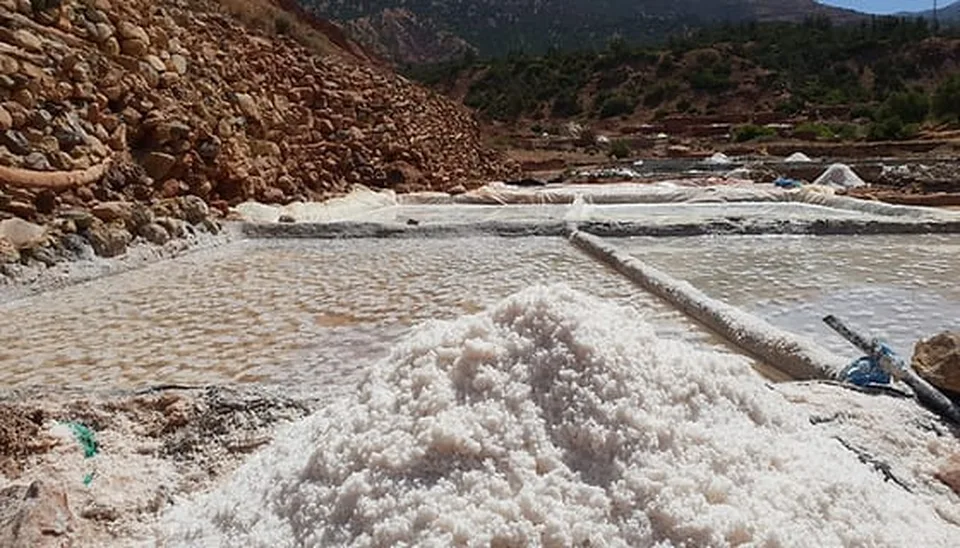
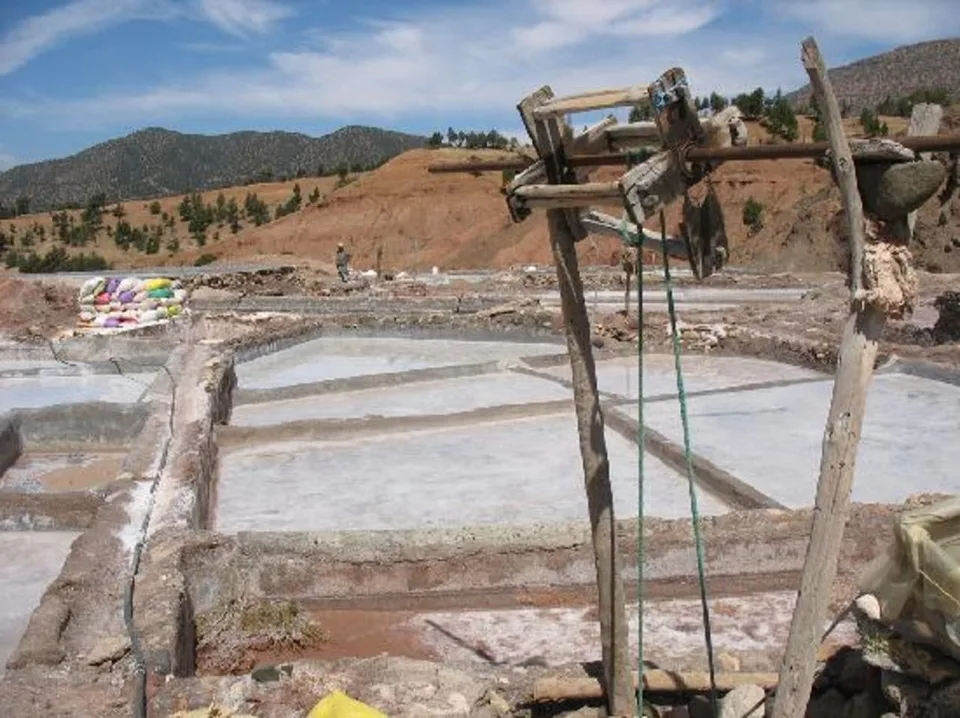
For generations local families have harvested pure mountain salt from natural saline springs using traditional solar evaporation pans. Watching artisans work these bright white beds among red clay hills is an unforgettable glimpse into High Atlas trade history.
Monuments and heritage architecture
Earthen kasbahs, old sanctuaries (zaouias) and traditional stone structures are dotted across the landscape, showing how mountain communities defended and organised their villages for centuries.
Centuries-old olive groves and presses
Marigha's microclimate feeds extensive olive orchards, and the area keeps historic stone presses where oil has been cold-pressed by traditional methods for generations.
The seguias
Ancestral irrigation channels that still divide the valley's water between families on a rota measured in hours. Our guides can explain how the turn-taking works.
The communal bread oven
Each household brings its dough; the baker knows every family's loaf by its mark. Bread is central to the cooking workshop we run at the house.
Orchard paths
Walnut, cherry and apple terraces line the river. Blossom in March, fruit from June, and shade all summer.
Planning a visit? Tell us what you would like to see and we will build the day around it.
Contact us